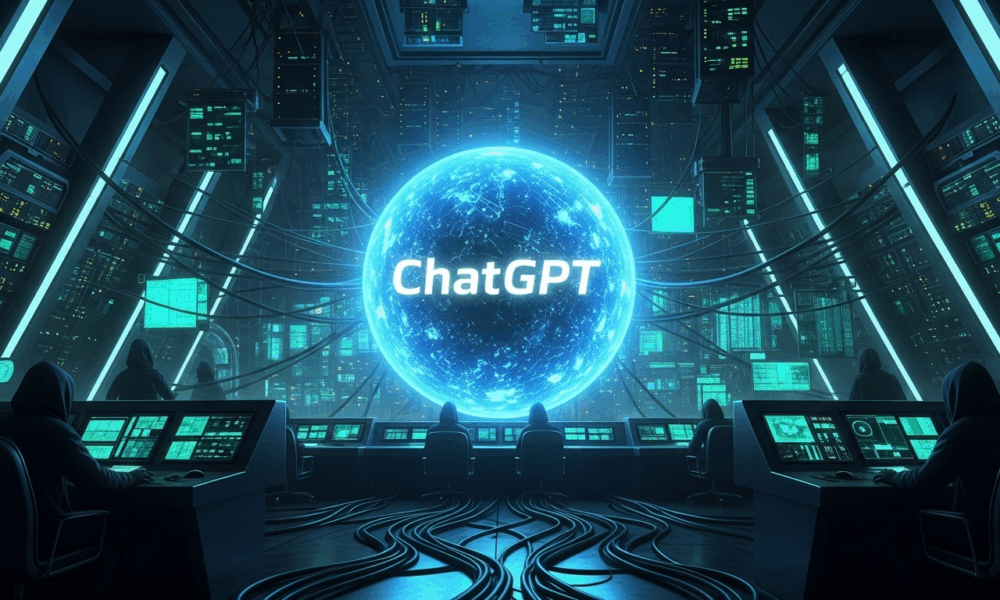
ChatGPT is no longer just a chatbot—it’s positioning itself as the next-generation operating system for the digital world. Recent moves by OpenAI, including a massive GPU deal with AMD and the launch of embedded “mini-apps,” reveal a strategy centered on dominating both infrastructure and user interaction. While this innovation is being celebrated as the dawn of agent-based computing, it carries serious implications for transparency, competition, energy consumption, and user autonomy.
This article unpacks what’s happening, why it matters, and what we risk if no guardrails are put in place.
The Power Play: OpenAI’s Massive AMD Deal
OpenAI’s agreement with AMD goes far beyond a hardware supply contract. It grants access to up to 6 gigawatts of GPU compute by 2026, ties the company into AMD’s chip roadmap, and includes stock warrants for up to 160 million AMD shares at near-zero cost. This isn’t procurement—it’s vertical integration through financial engineering.
Why It Matters
- Control of compute equals control of innovation
- Locks in next-gen GPU capacity competitors can’t easily match
- Circumvents Nvidia’s dominance with co-design influence
- Builds scale as a barrier to entry
Compute has become the new oil, and OpenAI just secured its drilling rights.
From Product to Platform: ChatGPT as a Conversational OS
During DevDay, OpenAI unveiled a new layer of “mini-apps” from partners like Spotify, Zillow, Expedia, and Canva. These aren’t standalone apps—they’re embedded services that live inside ChatGPT.
What This Means
- No app switching, no tabs, no icons
- Natural language becomes the interface
- ChatGPT orchestrates tasks across third-party services
- Users delegate decisions, not just search for answers
This isn’t a super-app. It’s an operating system without screens, where the front end of the internet becomes a conversation—and OpenAI controls the interface.
We’ve Seen This Movie Before
Tech history teaches us that platforms start as enablers and end as gatekeepers:
- Microsoft used Windows to dominate distribution
- Google turned search into a pay-to-play attention marketplace
- Apple and Meta built rent-seeking app and ad ecosystems
Now, ChatGPT is taking that script to the conversational layer.
The New SEO: AI Agent Optimization
If ChatGPT decides which mini-app to activate when you ask for a service, what determines its choice? Today, Zillow is the exclusive real estate partner. Tomorrow, will access depend on merit—or bidding wars? With no results page to inspect, decisions happen invisibly.
The Illusion of Agency
Delegation feels like freedom—until it isn’t. When users ask ChatGPT to “book the best flight” or “find housing,” they’re not browsing options—they’re outsourcing judgment.
Key Concerns
- Opaque decision-making
- Invisible incentives behind recommendations
- Lack of auditability
- Behavior shaped without awareness
We spent years criticizing black-box algorithms in search and social media. Now, we’re building one around every digital decision.
Compute as Barrier, Distribution as Capture
The AMD deal and mini-app rollout work in tandem:
- Compute monopoly → competitors can’t match scale
- Interface dominance → apps must flow through the ChatGPT layer
It’s a classic Silicon Valley strategy—power locked in through infrastructure and access. Sam Altman is not reinventing the playbook. He’s accelerating it.
The Energy Elephant in the Room
Six gigawatts of GPU power is comparable to six nuclear reactors. AI’s energy consumption is skyrocketing, and OpenAI is locking down energy capacity at national-infrastructure scale.
Why This Should Raise Alarms
- Private companies are controlling grid-scale resources
- Carbon impacts escalate with every new model
- Regulators still treat AI as software, not utilities
When AI companies secure gigawatts of power, they’re no longer startups—they’re infrastructure owners.
The Governance Gap
Every technological leap outruns regulation:
- App stores went unchecked for years
- Ad platforms built monopolies before policy caught up
- Search became monetized influence, not discovery
Now, AI agents are moving faster than any previous platform shift. Regulators are distracted by copyright and content moderation while the real power grab happens in distribution and compute.
Once agents begin acting on users’ behalf, disentangling convenience from manipulation becomes nearly impossible.
What Comes Next
The narrative is being framed as innovation, inevitability, and progress:
- Investors see execution and moat-building
- Developers see platform opportunity
- Users see convenience
But history warns us: Every time a company centralizes the interface, it centralizes power. Every time friction disappears, scrutiny does too.
What’s at stake isn’t just which apps we use—it’s who gets to decide what questions we’re even allowed to ask.
Conclusion: Innovation Needs Accountability
ChatGPT’s rise as a conversational operating system is reshaping digital life faster than any regulatory, ethical, or competitive structure can react. The world doesn’t need another unaccountable gatekeeper disguised as a platform. It needs:
- Transparency around incentives and logic
- Interoperability that prevents lock-in
- Competition that keeps the interface open
If we don’t insist on these now, we may find ourselves living inside the most powerful black box ever built.
What do you think?
Share your thoughts below—should ChatGPT be allowed to become the new operating system of the internet, or is it time to hit pause?
Disclaimer
This article is for informational and commentary purposes only and does not constitute legal, financial, or regulatory advice.