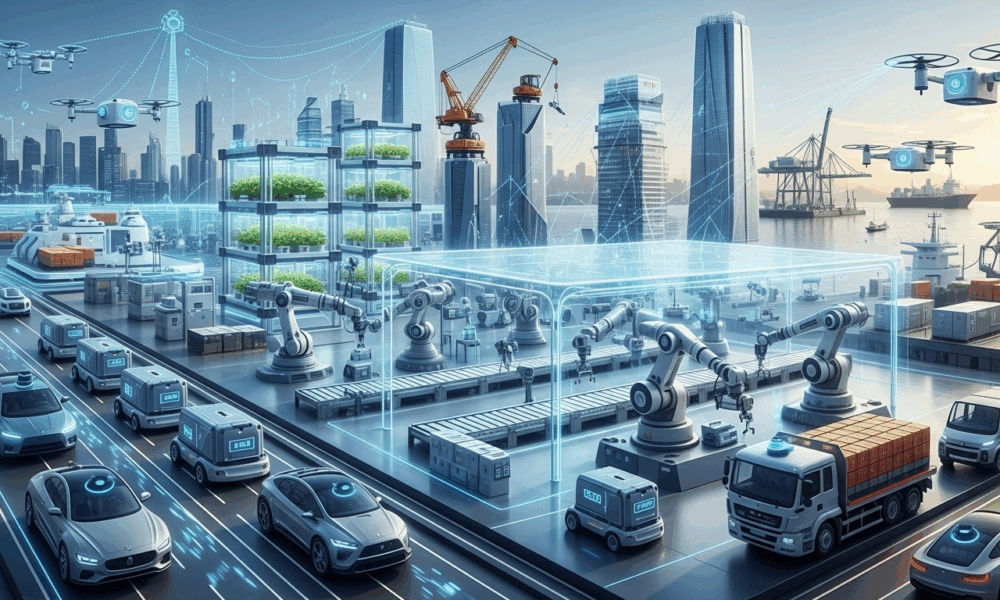
Autonomous systems—once confined to research labs and science fiction—are now rapidly integrating into industries worldwide. From self-driving logistics fleets to AI-powered virtual agents handling customer support, these systems are redefining productivity, safety, and efficiency.
1. The Shift from Experimental to Operational
In the last five years, autonomous systems have moved from pilot projects to full-scale deployment. Advances in artificial intelligence, sensor technology, and real-time data processing have made them reliable enough for mission-critical roles. Industries like manufacturing, healthcare, logistics, and agriculture now leverage these systems to perform repetitive, hazardous, or highly precise tasks.
2. Key Sectors Leading Adoption
- Logistics & Transportation: Autonomous delivery vehicles and drones streamline supply chains, reduce costs, and operate around the clock.
- Healthcare: Surgical robots, diagnostic AI, and autonomous hospital delivery systems are improving patient care while reducing human error.
- Manufacturing: Smart robots handle assembly, quality control, and predictive maintenance with minimal downtime.
- Agriculture: AI-driven tractors, drones, and irrigation systems boost crop yields while reducing resource waste.
3. Benefits Driving the Shift
- Cost Efficiency: Reduced labor costs and minimized errors increase profitability.
- Safety: Machines take over dangerous tasks, lowering workplace injury rates.
- Scalability: Systems can be replicated and deployed globally without proportional increases in staffing.
- Sustainability: Precision operations reduce waste, energy consumption, and environmental impact.
4. Challenges to Address
Despite the benefits, widespread adoption faces hurdles:
- Regulatory Compliance: Ensuring systems meet safety and ethical standards.
- Cybersecurity: Preventing malicious access or manipulation of autonomous controls.
- Public Trust: Overcoming fears about job loss and system reliability.
5. The Future Outlook
Experts predict that by 2030, autonomous systems will be embedded in nearly every major sector. As AI models become more adaptive and hardware more affordable, the boundary between “assisted” and “fully autonomous” operations will blur. Human workers will increasingly transition into supervisory, creative, and strategy-focused roles.